Smart Security Doors: Install & Maintain
Energy-efficient commercial security doors combine enhanced protection with improved thermal performance to reduce energy use and operating costs. This guide highlights the essential installation and maintenance steps, common challenges, and selection criteria to help you specify doors that balance security and efficiency.
Installation Process
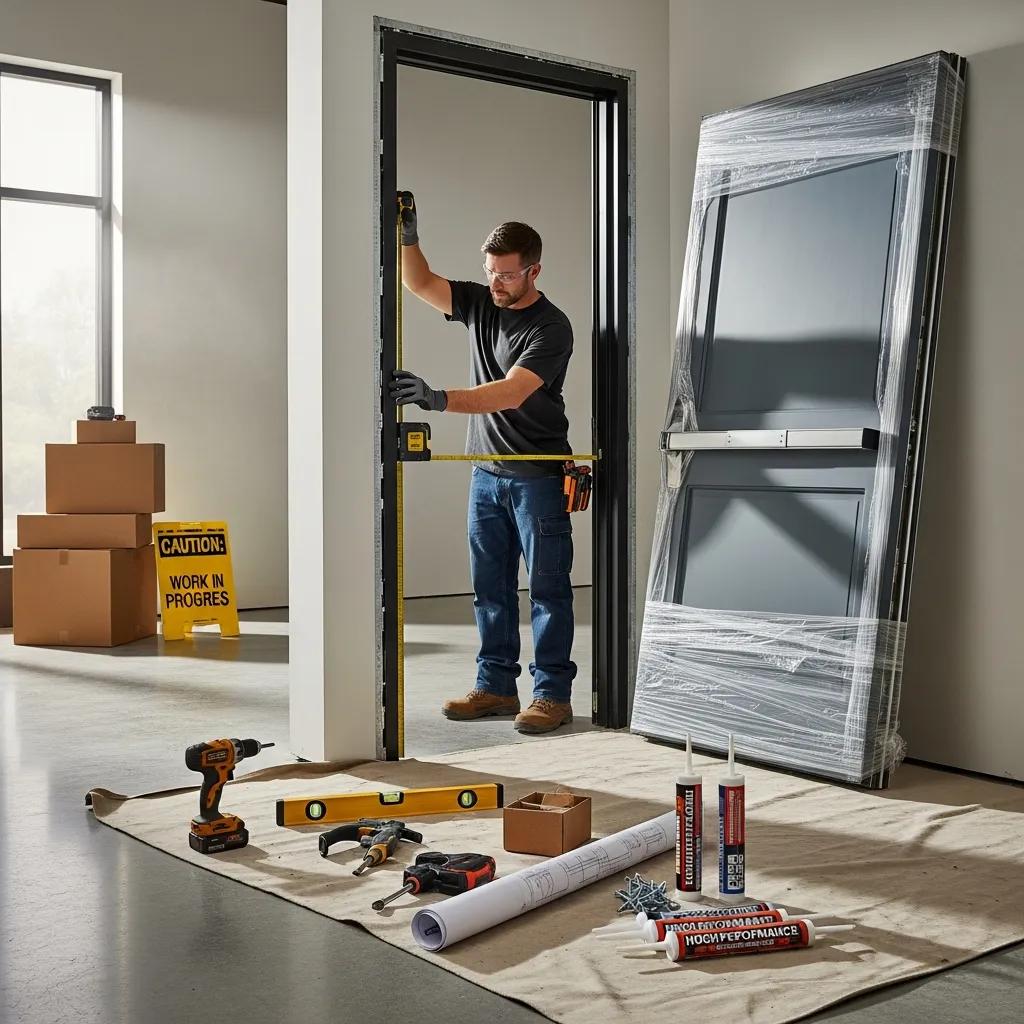
Correct installation preserves security and insulation. Accurate measurements, properly seated seals, and precise alignment keep thermal performance and hardware functioning as intended.
Specialized assemblies—such as fire-resistant doors—need extra attention to meet safety and regulatory requirements.
Specialized assemblies, including fire-resistant doors, demand meticulous installation to secure safety outcomes and ensure compliance with national regulations.
Fire-Resistant Doors: Installation & Safety Regulations
Fire resistant door assemblies (doors) for pedestrian or industrial traffic with frame, leaf or leaves, rolled or folded curtain etc. are designed for installation in the openings of the building’s vertical internal partitions. The building and its associated equipment shall be designed and made so that in case of fire it ensures the necessary load bearing capacity of the structure for the time specified in national regulations, limitation of fire and smoke propagation within the building, limitation of fire propagation onto the adjacent buildings and evacuation of people, and it provides safety of the rescue teams.
Thermal insulation of single leaf fire doors, test results comparison in standard temperature-time fire scenario for different types of doorsets, D Izydorczyk, 2015
Key Steps in Installation
- Measure Accurately : Record exact dimensions to avoid gaps and heat loss.
- Select Quality Materials : Use durable, insulated materials suited to the application.
- Professional Help : Certified installers ensure correct fit, seals, and hardware alignment.
Maintenance Process
Regular maintenance preserves security and insulation. Inspections spot seal degradation, corrosion, or wear early so repairs remain targeted and economical.
Effective maintenance strategies are essential to attain and sustain energy efficiency across commercial equipment, including security doors.
Energy Efficiency Through Equipment Maintenance
EET is usually practiced in two ways: replacing standard equipment with more energy-efficient ones or providing additional equipment to save energy.
Maintenance strategies and energy efficiency: a review, N Firdaus, 2023
Maintenance Best Practices
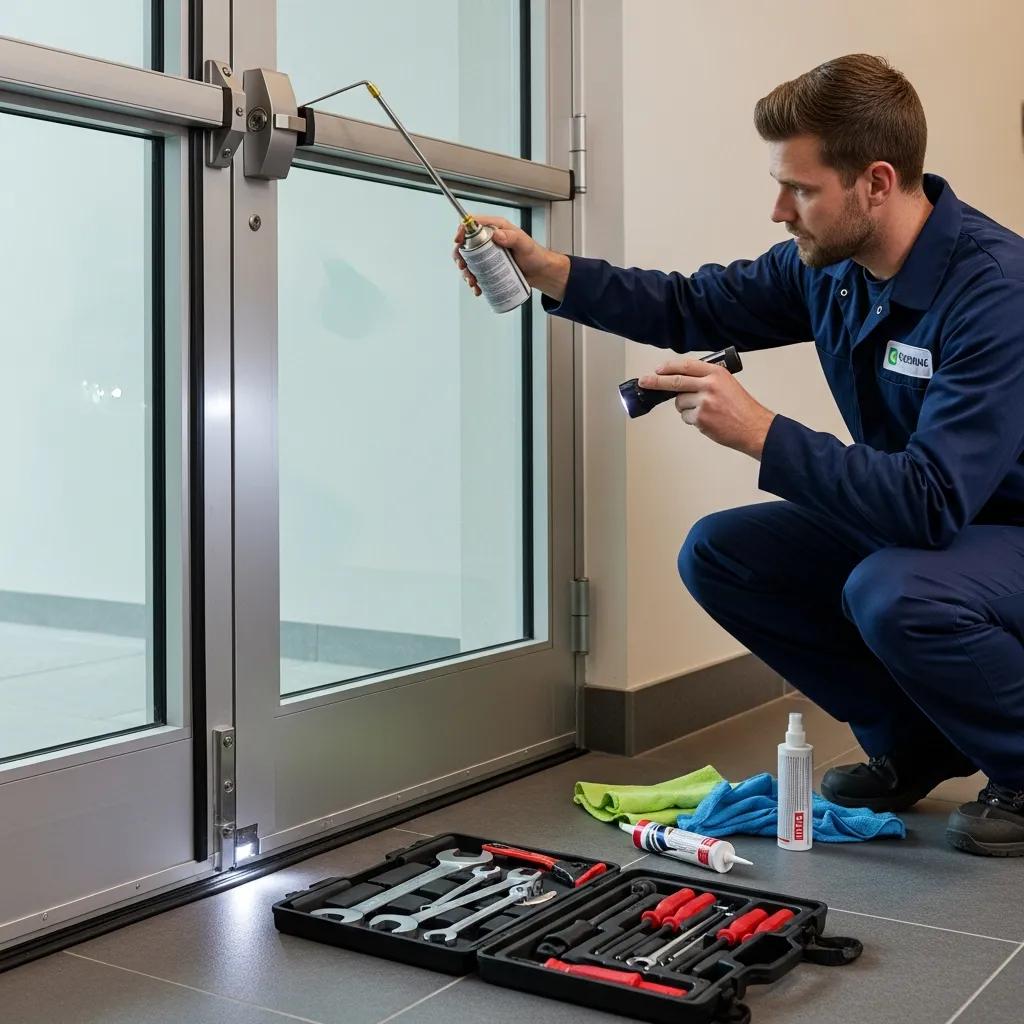
- Conduct Regular Inspections : Check seals, hinges, and corrosion.
- Lubricate Moving Parts : Keep hinges and locks operating smoothly.
- Address Issues Promptly : Repair damage to maintain security and thermal integrity.
Best Practices
Follow manufacturer instructions and schedule periodic professional inspections. Train staff on correct use to reduce avoidable wear.
- Follow Manufacturer Guidelines : Use specified parts and procedures.
- Schedule Regular Maintenance : Keep records of service and inspections.
- Train Staff on Usage : Proper operation prevents damage.
Potential Challenges
Common issues include misalignment from incorrect measurements, weather-related seal or finish degradation, and added complexity when specialist assemblies or hardware are required.
- Misalignment : Poor sizing reduces thermal and security performance.
- Weather Damage : Exposure accelerates wear.
- Complexity of Installation : Some systems require specialist techniques or tools.
Key Considerations
Specify thermal metrics (U-value/R-value), integrated security features, and confirm conformity with local codes when selecting doors.
Meeting energy targets typically requires design standards and material specifications that achieve established U-value thresholds.
Research identifies the standards and requirements that shape energy-efficient door design, especially those related to U-value compliance.
Energy-Efficient Door Design: U-Value & Insulation Standards
The door manufacturing industry has been mandated by the Canadian federal government to authenticate that each product that they sell has a U-value no greater than 2.00 W/m2K. This regulation has caused door producers to re-evaluate their designs and certify only their most efficient designs before the enforcement date of January 1st, 2010. As it stands, solid wood doors will need to be built to a minimum thickness of 2-1/4”; use foam insulated cores; and / or incorporate the use of large sections of insulated
Energy efficient door design, 2009
Important Factors to Consider
- Energy Efficiency Ratings : Choose doors with verified insulation ratings.
- Security Features : Look for reinforced construction and robust locks.
- Compliance with Standards : Confirm certification and code conformity.
What Are the Key Benefits of Energy-Efficient Commercial Security Doors?
These doors reduce heating and cooling costs through better insulation and improve site protection with durable hardware and reliable locks, delivering operational savings and asset protection.
Together these benefits support investing in higher-performance doors across commercial properties.
How Do Energy-Efficient Doors Enhance Security and Reduce Costs?
Combining solid construction and advanced locking hardware with insulated cores and effective seals reduces heat transfer and improves resistance to forced entry, lowering energy use while protecting operations.
Which Insulation Options Improve Door Performance?
Common options include insulated panels, thermal breaks to limit bridging, and quality weather-stripping to prevent drafts.
In industrial settings, thermal breaks and engineered insulation systems play a key role in reducing heat transfer and improving overall performance.
Industrial Door Thermal Insulation & Breaks
This project is in collaboration with AA’s business segment for industrial doors. These systems incorporate lower thermal conductivity at the junction between components, a design feature commonly referred to as a thermal break.
Improving the Thermal Insulation of Industrial Doors, 2024
Effective Insulation Options
- Insulated Panels : Reduce conductive heat loss.
- Thermal Break Technology : Limits thermal bridging at junctions.
- Weather Stripping : Prevents perimeter drafts.
How to Choose the Right Commercial Security Door for Your Business Needs?
Choose a door that matches your threat profile, energy goals, and code obligations. Consider lifecycle costs and maintenance needs alongside initial price.
Selection Criteria
- Assess Security Needs : Define threat level and traffic.
- Check Compliance : Verify local codes and certifications.
- Consider Customization : Tailor materials and hardware to the site.
What Materials Offer Optimal Energy Efficiency and Durability?
Steel, fiberglass, and aluminum each balance strength, insulation, and maintenance differently; choose based on performance priorities and environment.
Recommended Materials
- Steel : Strong and impact resistant.
- Fiberglass : Good insulation and low upkeep.
- Aluminum : Lightweight and corrosion resistant.
How Do Custom Door Designs Meet Specific Security and Efficiency Requirements?
Custom designs let you specify insulation systems, hardware, and finishes to meet defined security objectives and thermal targets while matching the building’s appearance.
Benefits of Custom Designs
- Material Selection : Choose the optimal materials for performance.
- Tailored Performance Metrics : Meet specific security and energy goals.
- Aesthetic Options : Align appearance with the facility.
What Are Best Practices for Installation and Maintenance of Energy-Efficient Doors?
Hire qualified installers, keep scheduled servicing, and document all work to preserve performance and warranty coverage.
Best Practices Overview
- Hire Qualified Professionals : Ensure correct installation and certification.
- Conduct Regular Maintenance Checks : Identify wear early to avoid failures.
- Educate Staff : Proper use reduces damage and downtime.
When Should You Consider Emergency Repair Services for Commercial Security Doors?
Call emergency repair services when damage or malfunction compromises security or safe operation to limit downtime and further harm.
Situations Requiring Emergency Services
- Physical Damage : Structural or frame damage.
- Operational Issues : Failures that prevent secure closing.
- Security Compromise : Breaches of locks or hardware.
What Are Common Issues Requiring Immediate Attention?
Urgent problems include mechanical failures, storm damage, and lock faults that leave a site exposed.
Common Issues to Address
- Door Malfunctions : Fix operational faults promptly.
- Weather-Related Damage : Repair seals, frames, and finishes after storms.
- Locking Mechanism Failures : Restore locks to maintain access control.
How Does Rapid Emergency Service Protect Your Business Operations?
Fast emergency response reduces downtime, restores secure access, and prevents escalation that increases costs or disrupts operations.
Importance of Rapid Response
- Minimizes Downtime : Fast repairs keep operations running.
- Restores Security : Immediate fixes protect assets and people.
- Prevents Further Damage : Timely action limits escalation.
For businesses seeking tailored solutions, custom door designs provide flexibility to meet security and energy-efficiency requirements.
Frequently Asked Questions
What are the advantages of using energy-efficient commercial security doors?
They reduce heating and cooling costs via better insulation, strengthen site protection with durable hardware, and lower long-term operating expenses.
How do I choose the right insulation type for my security door?
Base the choice on climate, energy goals, and usage: insulated panels, thermal breaks, and quality weather-stripping are common effective options.
What maintenance tasks are essential for energy-efficient security doors?
Schedule inspections, lubricate moving parts, and repair defects promptly; keep maintenance records to support warranties.
How can I improve the lifespan of my commercial security doors?
Follow routine maintenance, address faults quickly, ensure proper installation, and limit severe environmental exposure.
What should I consider when customizing a security door?
Consider the facility’s security profile, insulation needs, applicable codes, and select materials and hardware that meet operational and aesthetic requirements.
What are the potential risks of improper installation of security doors?
Poor installation can reduce security, increase energy costs, void warranties, and lead to expensive repairs; use qualified professionals.
What are the energy efficiency ratings to look for in commercial security doors?
Review manufacturer U-value and R-value data, and seek third-party certifications; lower U-values indicate better insulation.
How can I ensure my commercial security door complies with local building codes?
Verify regulations, request test documentation from manufacturers, and use licensed installers familiar with local codes.
What are the signs that my energy-efficient commercial security door needs repair?
Look for difficulty operating, drafts or gaps, visible damage, and malfunctioning locks—these indicate service is needed.
What types of insulation are most effective for commercial security doors?
Insulated cores or panels, thermal breaks, and high-quality weather-stripping combined typically yield the best performance.
How often should I schedule maintenance for my commercial security doors?
Inspect doors at least twice yearly and before extreme seasonal conditions to extend service life and preserve performance.
What should I do if my commercial security door is damaged during a storm?
Secure the opening if needed, document damage for insurance, and contact emergency repair services if security or operation is compromised.
Conclusion
Energy-efficient commercial security doors deliver reduced energy use and improved site protection when specified, installed, and maintained correctly. Prioritize professional installation and planned maintenance to secure long-term performance and savings.
Investing in high-performance doors supports site security and sustainability goals. Ensure correct installation, regular servicing, and documented maintenance to maximize lifespan and energy benefits.