Fire Door Inspection Requirements Explained: Ensuring Compliance and Safety
Fire doors provide passive protection in commercial and industrial buildings by limiting fire and smoke spread. Understanding inspection requirements helps property owners meet regulations and keep occupants safe. This article summarizes standards, inspection intervals, maintenance best practices and the documentation needed to show due diligence.
Compliance Standards
The primary U.S. standard for installation, inspection and maintenance is NFPA 80, which sets minimum requirements and inspection intervals. Certified inspections and scheduled maintenance verify conformity with NFPA 80 and reduce safety and legal risks for facility owners.
Recognised test protocols and certification labels further demonstrate a door’s intended performance.
Fire Door Certification and International Testing Standards
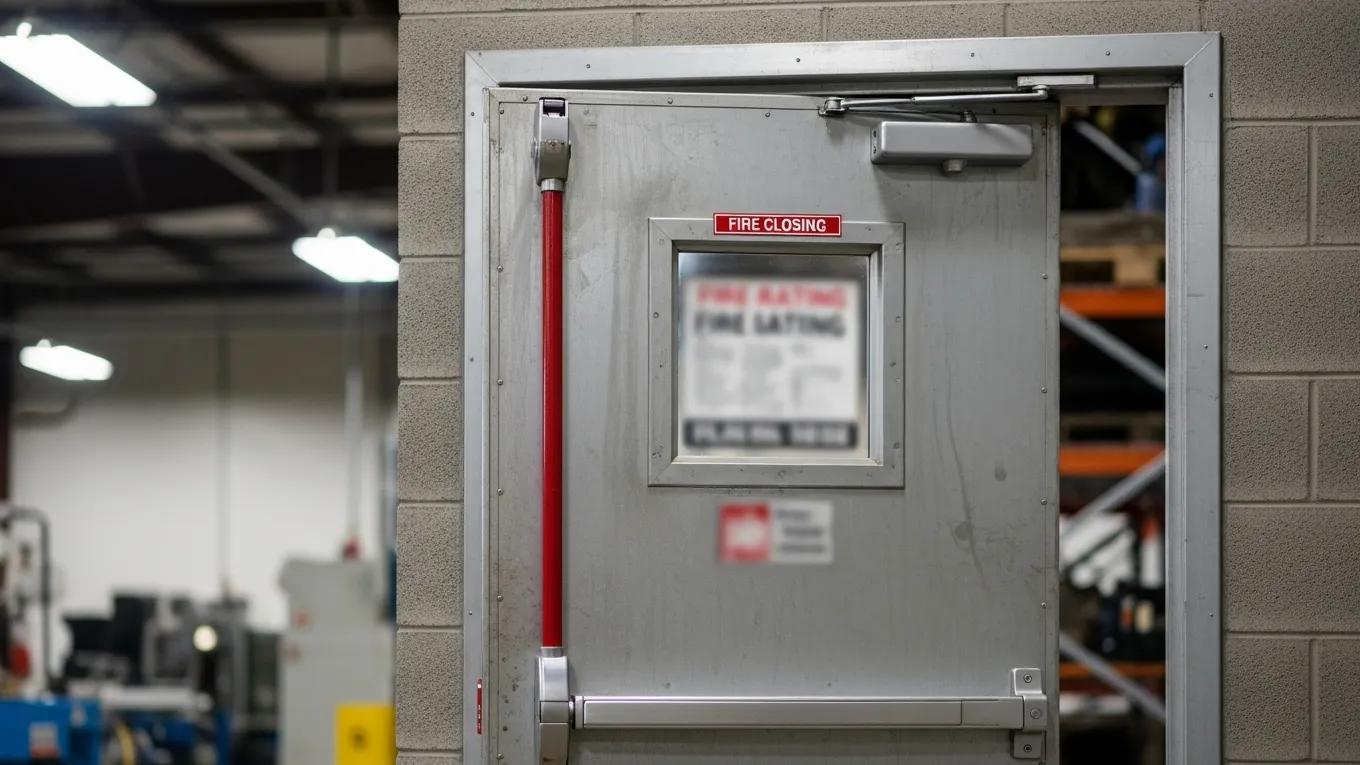
Fire doors are passive devices intended to mitigate the consequences of fire by restricting the spread of fire and smoke within a building. Certification provides building owners and operators with an objective performance label based on exposure to fire and heat. Testing protocols vary by region (for example, US, Europe and China) but are broadly consistent in using a time‑dependent temperature curve to define the thermal load. Relevant European standards include EN 1634-1, EN 13501-2 and EN 1363-1.
Certification of a Fire Door–An Overview, J Silva, 2025
Inspection Frequency
Inspections should be scheduled regularly. NFPA guidance calls for at least an annual inspection for most doors; doors in heavy‑use or high‑traffic locations commonly need quarterly checks. Maintaining the inspection cadence lowers the chance of failure and helps meet regulatory expectations.
Inspection Process
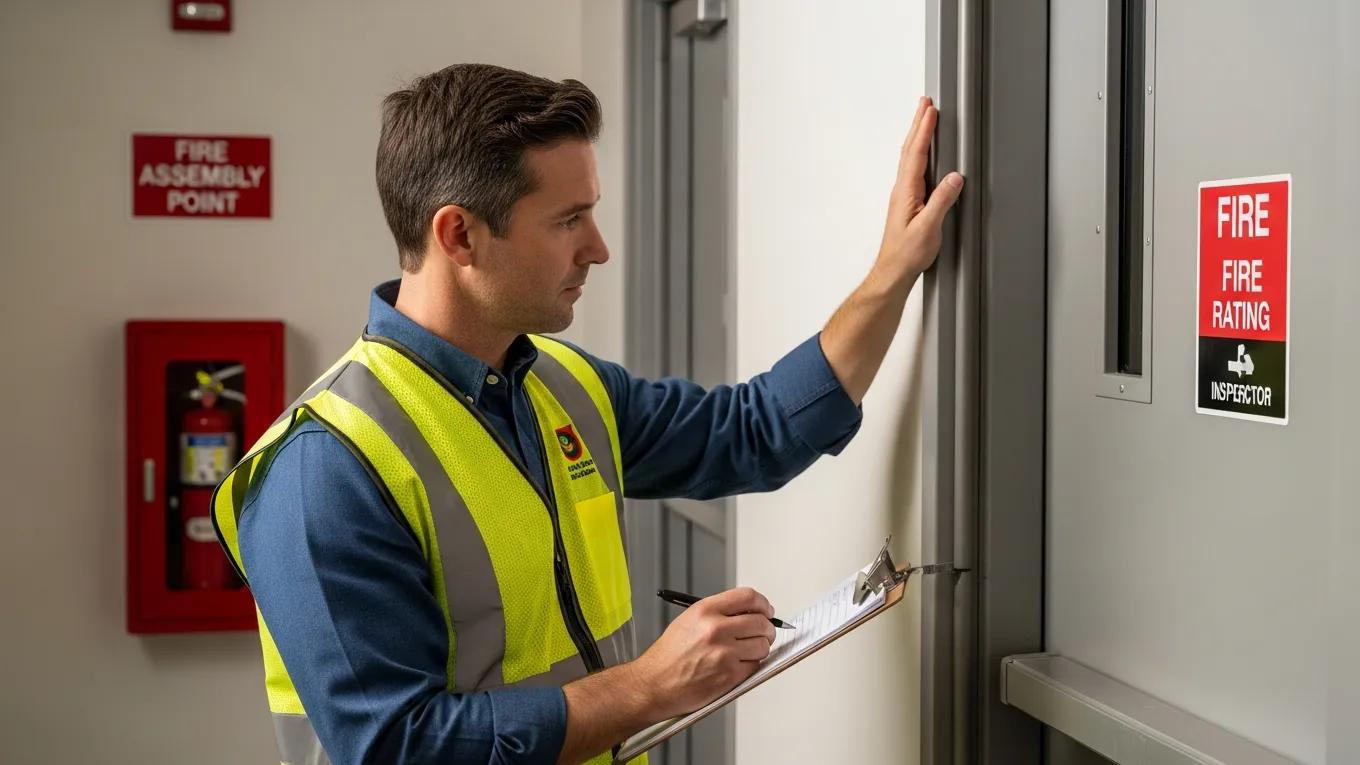
Inspections follow a consistent sequence to confirm each assembly meets safety requirements. Inspectors assess installation, operation and visible defects; the main steps are listed below.
- Visual Inspection: Check for physical damage, fit and correct installation.
- Operational Testing: Verify the door opens, closes and latches without obstruction.
- Component Checks: Inspect hinges, seals and labels for condition and compliance.
Inspectors record findings and any corrective actions. Clear records support audits and maintenance planning. The Door Company of Ohio, Inc. provides inspection and repair services to help maintain compliance and reliability.
Documentation
Keep inspection records for each door assembly showing date, findings, corrective work and personnel involved. Accessible, complete records demonstrate due diligence and reduce exposure during audits or incidents.
Common Defects
Routine inspections frequently identify a limited set of defects that impair performance.
- Damaged Seals: Worn or missing seals reduce smoke and fire containment.
- Improper Installation: Poor fitting or misalignment can prevent proper closing.
- Physical Damage: Dents, warping or missing parts affect operation and certification.
Prompt repair restores certified performance and preserves the door’s fire‑containment role.
Best Practices
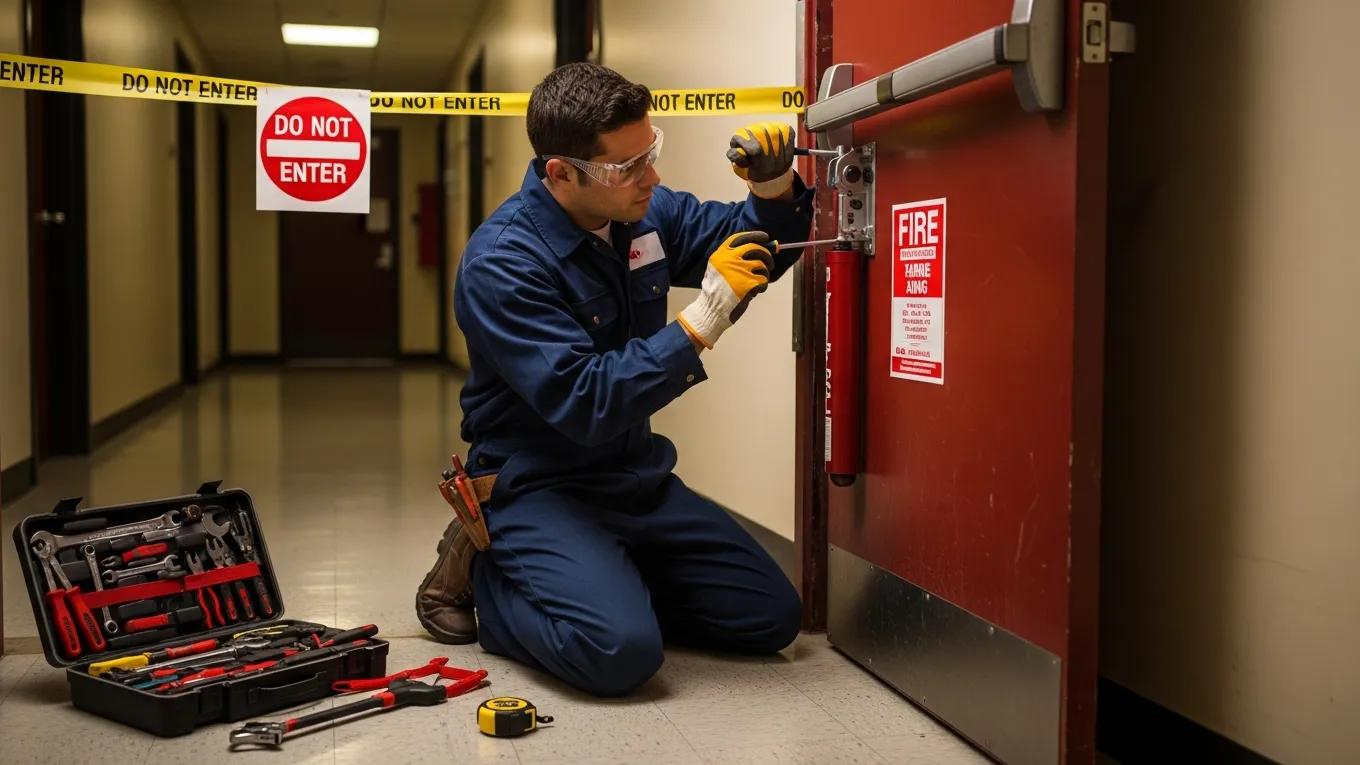
Adopt a proactive maintenance regime combining scheduled inspections, qualified repairs and staff awareness. These measures keep doors reliable and compliant.
- Regular Inspections: Annual baseline checks, with more frequent reviews for busy doors.
- Professional Maintenance: Use certified technicians for repairs to preserve compliance.
- Training Staff: Teach staff the importance of keeping fire doors clear and reporting faults.
Planned maintenance and rapid repairs reduce long‑term risk and operational disruption.
Consequences of Non-Compliance
Failing to maintain fire doors carries serious consequences, including legal liability, larger property damage and regulatory fines. Non-compliant doors may fail to contain fires, increasing harm and costs.
- Legal Liabilities: Owners can face lawsuits if doors are non-compliant after an incident.
- Increased Risk of Fire Spread: Faulty doors can contribute to greater damage and loss.
- Fines and Penalties: Authorities may impose sanctions for code breaches.
These risks make regular inspections, prompt repairs and accurate record keeping essential.
Fire Door Compliance Standards, Regulations and Codes
NFPA 80 is the key standard for fire door installation, inspection and maintenance in the U.S. Following NFPA 80 helps ensure doors perform during emergencies and meets a core regulatory obligation for commercial properties.
Inspections are governed by national standards like NFPA 80 and by applicable local fire codes. Property owners must meet both national and local requirements when scheduling inspections and repairs.
Ohio codes incorporate NFPA provisions and may add state‑specific requirements. Facility operators in Ohio should consult state code alongside NFPA standards to confirm full compliance.
Comprehensive Fire Door Inspection Checklist
A concise checklist ensures consistent assessment of critical items that affect fire performance and compliance.
- Visual Inspection: Check for damage and correct installation.
- Operational Testing: Ensure proper opening and closing.
- Component Checks: Verify hinges, seals and labels are compliant.
Using a standard checklist supports thorough documentation and consistent inspections.
Inspect components that directly affect containment and operation; focus saves time and reduces oversight.
- Hinges: Secure and functioning.
- Seals: Intact to prevent smoke and fire spread.
- Labels: Fire‑rating labels present and legible.
Regular checks of these items help maintain the door’s certified performance.
Frequently Asked Questions
How Should Fire Door Maintenance and Repairs Be Managed?
Manage maintenance with a documented schedule, qualified technicians and retained records for each assembly. This approach lowers failure risk and supports regulatory compliance.
Specialist maintenance and emergency repair services help keep doors serviceable and compliant.
What Are the Maintenance Requirements to Ensure Fire Door Compliance?
Maintenance must include routine inspections, prompt repair of defects and accurate records of all activities. Confirm installations conform to NFPA 80 and any local codes.
When Are Emergency Fire Door Repairs Necessary and How Are They Handled?
Emergency repairs are needed when a door cannot close, has missing parts or shows structural damage that compromises safety. Engage certified technicians immediately to return the assembly to a compliant condition.
How Often Must Fire Doors Be Inspected and Certified?
NFPA guidance specifies at least annual inspection and certification for most doors; higher‑use environments require more frequent verification. Regular inspections support reliable emergency performance.
What Is the Recommended Frequency for Fire Door Inspections?
Use an annual baseline and add quarterly checks for high‑traffic doors. Set intervals based on usage patterns and facility risk profile.
Who Is Qualified to Perform Fire Door Inspections and Issue Certifications?
Qualified inspectors complete recognized training and certification programs. Engaging certified professionals improves inspection quality and ensures certifications are defensible.
What are the consequences of failing to maintain fire doors?
Failing to maintain doors can lead to legal exposure, fines and increased fire spread. Regular inspections and repairs reduce these liabilities.
How can property owners ensure their fire doors are compliant?
Follow NFPA 80, schedule inspections, use certified technicians for repairs and keep complete documentation. Staff training helps sustain compliance.
What should be included in fire door inspection documentation?
Record the inspection date, findings, corrective actions taken and the names of inspectors and technicians. Maintain these records for audits and incident review.
Are there specific training requirements for fire door inspectors?
Yes. Inspectors should complete recognized training that covers standards, inspection techniques and local codes to ensure thorough assessments.
What types of fire doors require more frequent inspections?
Doors in heavy‑use or high‑traffic settings—hospitals, schools and retail centers—typically need more frequent inspections, often quarterly.
How can property owners educate their staff about fire door safety?
Provide training sessions, clear written guidance and regular drills. Emphasize correct door use and prompt reporting of faults.
What are the best practices for fire door maintenance?
Best practices include scheduled inspections, prompt professional repairs, accurate record keeping and staff awareness programs to preserve certified performance.
Conclusion
A focused, documented approach to fire door inspection and maintenance protects occupants and reduces organizational liability. Adopt recognized standards, use certified professionals and keep precise records. Schedule regular inspections and address defects promptly to maintain operational readiness.