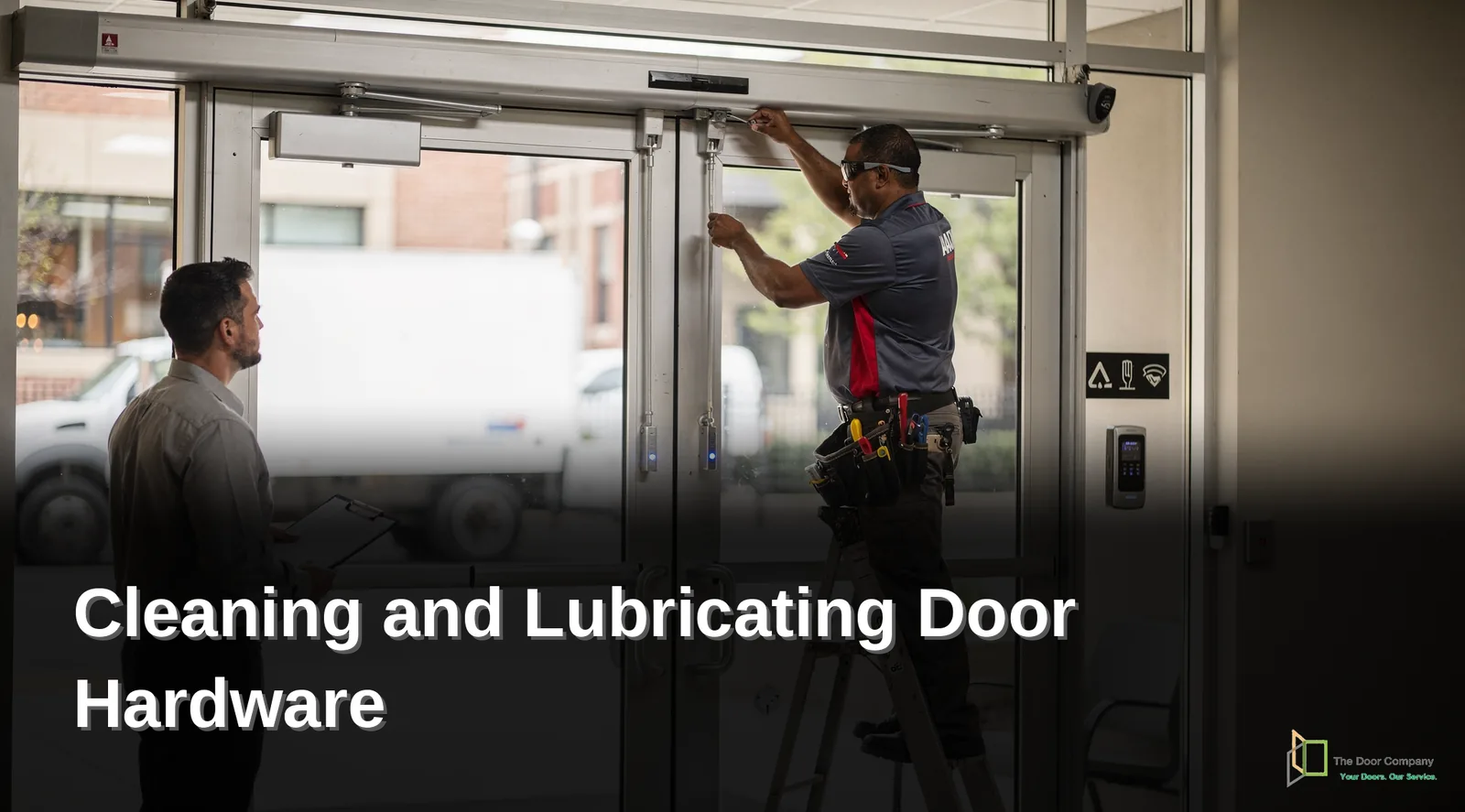
Technicians clean commercial door hardware with a mild detergent and soft cloth, then apply silicone-based lubricant to hinges, locks, and closers every 6 months. The Door Company of Ohio Inc., based in Columbus, Ohio, recommends avoiding oil-based products that attract dirt and cause buildup over time.
Proper cleaning and lubrication of commercial door hardware requires wiping hinges, locksets, and closers with a clean cloth before applying manufacturer-approved lubricant to moving parts only. Facility managers should avoid spraying lubricant on locking mechanisms without checking compatibility. The Door Company of Ohio recommends scheduled maintenance and offers 24/7/365 emergency repair service for hardware issues.
Key Takeaways
- Regular maintenance of commercial door hardware preserves longevity and protects building security and productivity.
- Hinges, locks, closers, and panic hardware require scheduled lubrication for smooth operation.
- Exterior door maintenance includes specific care for hinges and locks to ensure trouble-free operation.
- The Door Company of Ohio Inc. in Columbus provides professional maintenance guidance for commercial doors.
What Do You Need Before Cleaning Commercial Door Hardware?
Five components demand attention before any maintenance work begins: hinges, locksets, door closers, panic and exit devices, and pivots. Facility managers who skip preparation risk missed wear points, incomplete lubrication, and repeat service calls within weeks. Doors serve as a necessary function of building safety and daily operation, so keeping hardware at peak performance carries real weight for any business.
What Tools and Supplies Are Needed?
Gather a checklist before starting: clean rags, a mild degreasing cleaner, a soft brush for debris removal, and lubricant rated for commercial-grade hardware. Cleaning and lubricating door hardware correctly also requires knowing which parts move and which parts lock. Each responds differently to product and technique.
Should Facility Staff Handle This Alone?
Not always. A Planned Preventative Maintenance program brings scheduled visits that inspect, maintain, and repair hardware before failures interrupt daily operations. The Door Company of Ohio, based in Columbus, gives Central Ohio facility managers a nearby resource for this ongoing hardware care, reducing guesswork on high-traffic entrances.
How Do You Clean and Lubricate Each Hardware Component?
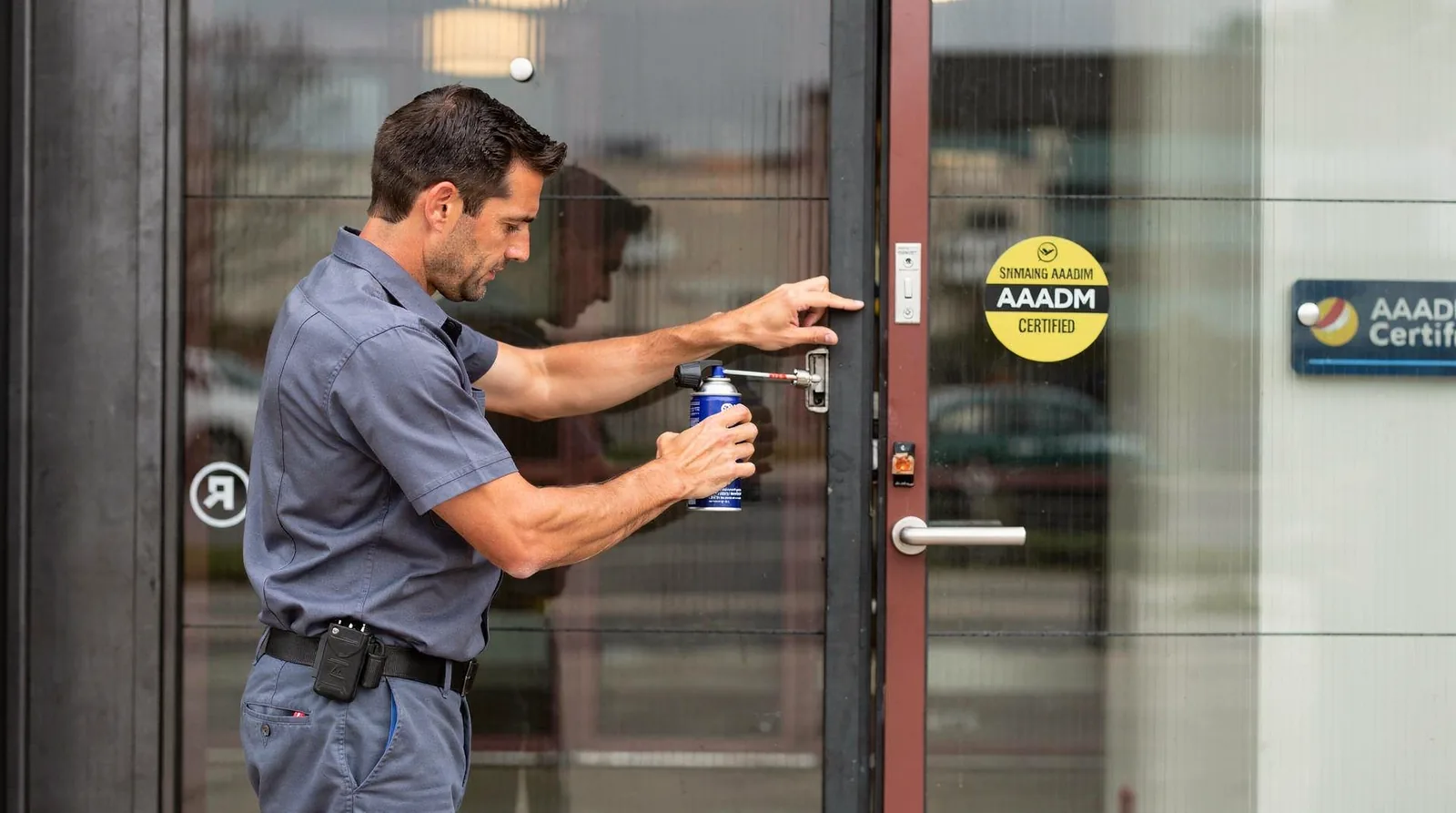
Different hardware components demand different lubrication methods, and mismatched products cause more harm than good. Hinges, locksets, and closers each carry distinct moving parts that wear differently under daily traffic. Facility managers overseeing high-traffic entrances benefit from a component-by-component approach rather than a single blanket treatment.
Cleaning and lubricating door hardware starts with the hinge assembly. The knuckle and pin interface bears constant friction from every open-close cycle, and without lubrication that metal-on-metal contact produces squeaking and accelerated wear. Facility supervisors should follow this sequence for hinge maintenance:
- Wipe away accumulated dust and grit from the knuckle before applying any product.
- Apply a small amount of lubricant directly into the pin joint.
- Cycle the door several times to work lubricant through the full knuckle length.
- Wipe excess residue to prevent buildup that attracts more dirt.
What About Locksets and Latching Hardware?
Locksets require lubrication at three distinct points: the cylinder keyway, the latchbolt mechanism, and the internal springs. Each point uses hardware appropriately suited to fine tolerances, since heavy lubricants clog keyways and interfere with spring tension. Neglecting any single point compromises the entire locking mechanism, leaving doors that stick, jam, or fail to latch securely. A real liability for entrances that see hundreds of daily openings.
Why Rely on a Professional Maintenance Program?
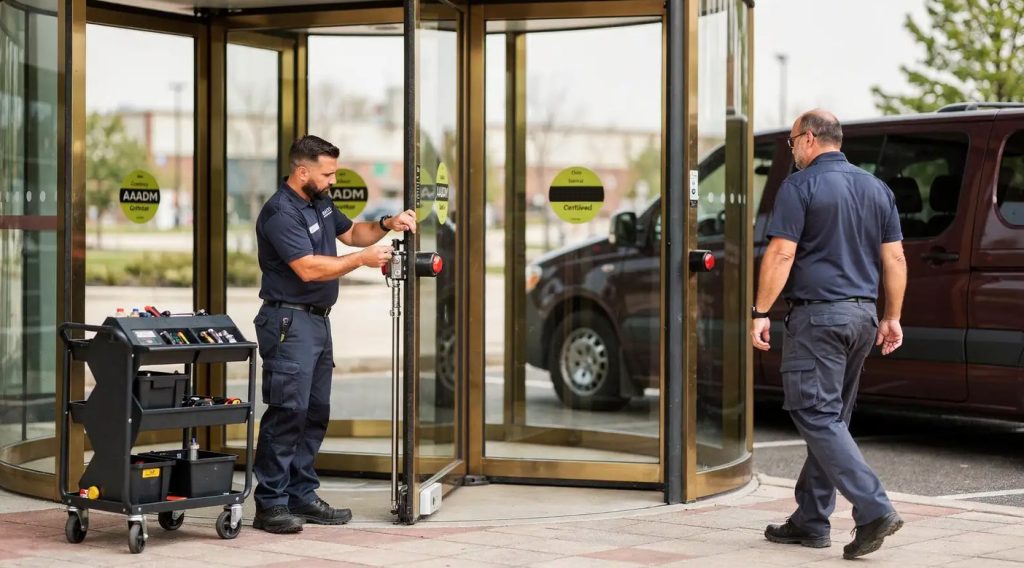
In-house wipe-downs address surface dirt, but they rarely catch developing wear before it becomes a breakdown. Professional Planned Maintenance Programs combine scheduled cleaning and lubrication tasks with emergency breakdown service, keeping equipment downtime to a minimum. For buildings where a stuck or jammed entrance disrupts operations, staffing, or safety compliance, that combination of routine care and rapid response protects both the hardware investment and the daily flow of people through the door.
What Should You Do If Hardware Still Sticks or Fails?
Persistent sticking after cleaning and lubricating door hardware signals a problem beyond routine upkeep. Facility managers should treat this as a warning sign, not a nuisance to ignore. Unresolved wear compromises building safety and slows daily operations, turning a minor fix into a costly repair down the road.
When does a hardware issue require a professional technician?
A hardware issue needs professional attention once lubrication and cleaning fail to restore smooth operation. At that point, a facility should call for service rather than risk further damage:
- Document the symptom (grinding, binding, misalignment) before calling.
- Contact The Door Company of Ohio‘s 24/7/365 emergency door repair service for facilities that cannot wait.
- Expect a live answering service to connect a technician-on-call within 1 hour.
- Expect that technician on-site within 4 hours of the initial call.
Does hardware failure affect fire door compliance?
Sticking or failed hardware on a fire-rated opening raises compliance concerns. These openings fall under State of Ohio Code Compliance Inspections and Fire Door Certification requirements. Facility managers should schedule professional inspection promptly rather than deferring repair.
FAQ
What tools do you need before cleaning commercial door hardware?
Gather clean rags, a mild degreasing cleaner, a soft brush for debris removal, and lubricant rated for commercial-grade hardware. Knowing which parts move versus lock determines the correct product and technique.
How do you properly lubricate door hinges?
Wipe dust and grit from the knuckle, apply lubricant directly into the pin joint, cycle the door to work it through, then wipe excess residue to prevent buildup that attracts dirt.
Should facility staff handle hardware maintenance without professional help?
Not always—The Door Company of Ohio offers a Planned Preventative Maintenance program with scheduled visits, plus 24/7/365 emergency repair service for hardware issues.
Conclusion
In closing, regular cleaning and lubrication of commercial door hardware represents a straightforward yet essential investment in operational reliability and safety. By following these maintenance practices, you protect your facility’s entrances from premature wear, reduce emergency repair costs, and ensure smooth, secure access for occupants. When maintenance demands exceed your in-house capabilities, partnering with experienced professionals ensures the job is completed correctly and your doors remain compliant and dependable.