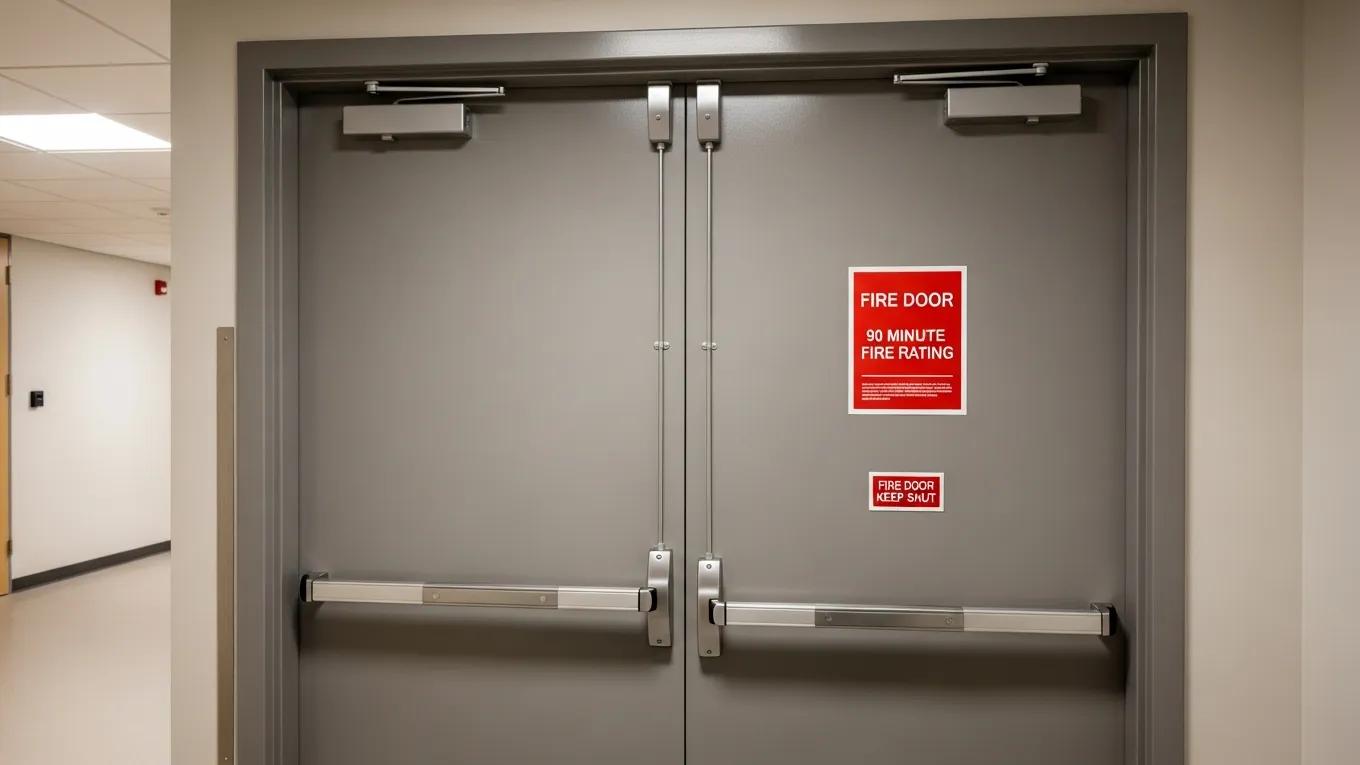
The fire door certification process supports life safety and regulatory compliance in commercial properties. Fire doors limit fire and smoke spread, protecting occupants and assets. This guide summarizes certification steps, inspection priorities, maintenance practices, and documentation essentials that building owners and facility managers need to sustain compliance and reduce legal exposure.
Essential Steps in the Fire Door Certification Process
Certification follows three practical steps: correct installation per code (proper fit and manufacturer‑specified hardware), regular inspections by qualified professionals, and complete documentation showing installation and maintenance meet the applicable standards.
The Door Company of Ohio, Inc. provides commercial and industrial door services, including fire door installation and maintenance. Their experience supports compliance; see their commercial door design services for options.
Key Inspection Requirements
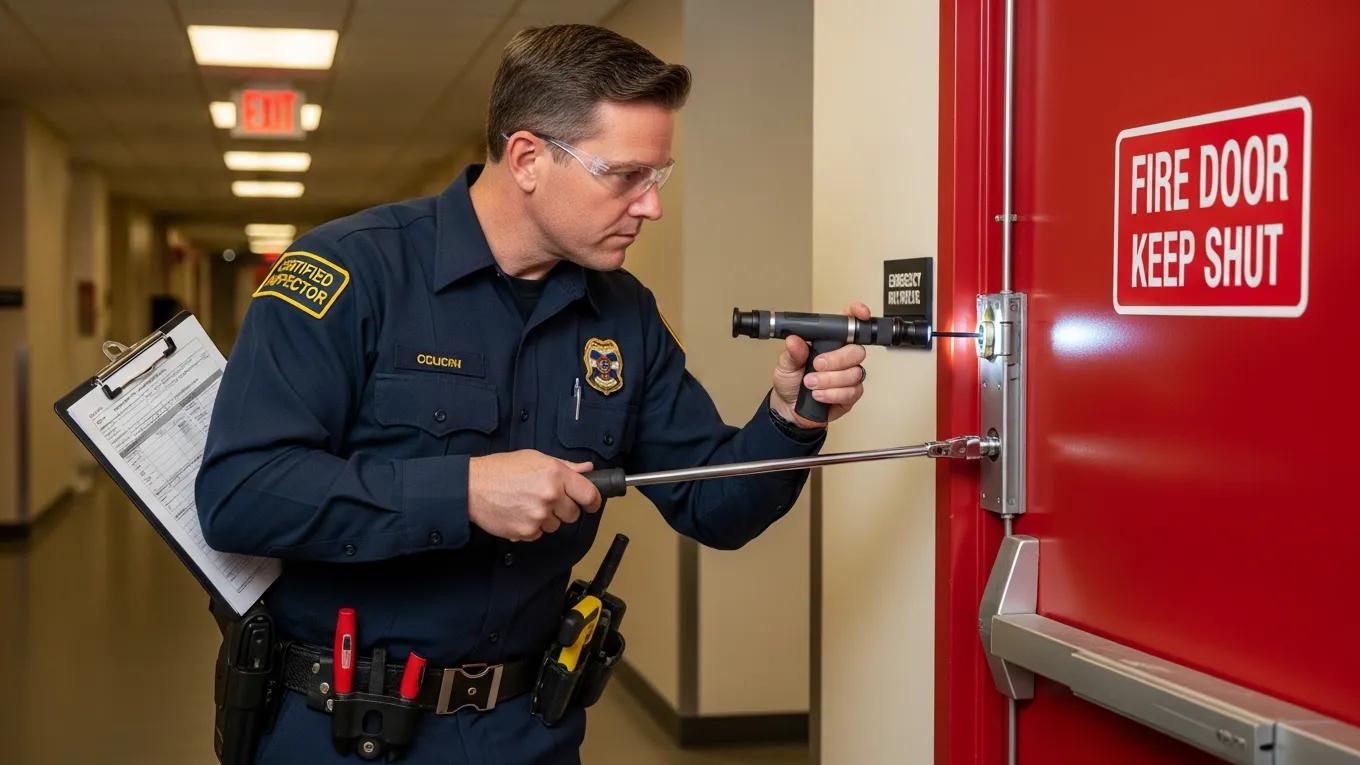
Fire door inspections are a core element of a compliance program. The essentials are listed below.
- Annual Inspections: At minimum, inspect once a year to confirm operation.
- Qualified Inspectors: Use certified professionals familiar with fire safety codes.
- Documentation: Keep inspection records available for review.
These practices help ensure fire doors function in an emergency and meet performance ratings established by international testing standards.
Fire Door Certification and International Testing Standards
Fire doors are passive devices that mitigate the consequences of fire by preventing the spread of fire and smoke inside a building. Certification provides owners and occupants with a performance label based on exposure to fire and heat. Testing standards vary by region (US, Europe, China) but generally agree on the time‑dependent temperature profile that defines the thermal load. In Europe, relevant standards include EN 1634-1; EN 13501-2; and EN 1363-1.
Certification of a Fire Door–An Overview, J Silva, 2025
What Are the Key Fire Door Inspection Requirements?
Inspections verify the door will perform under emergency conditions.
- Annual inspections by certified professionals: Confirms ongoing compliance.
- Documentation of inspections: Records findings and corrective actions.
- Common defects to look for: Gaps, damage, misaligned frames, and faulty hardware.
How Often Must Fire Doors Be Inspected to Meet Compliance?
Annual inspection is the baseline. Inspect more frequently in high‑traffic areas or where doors wear faster to catch issues before they become critical.
Frequency of Inspections for Compliance
Inspect at least once per year; increase frequency based on usage, environment, or previous defects. Timely inspections allow prompt repairs and preserve performance.
Critical Components Checked During Inspections
Inspectors evaluate components essential to containment and operation.
- Door condition and physical state: Look for visible damage or warping.
- Seals and hardware functionality: Verify gasketing, closers, latches, and hinges work properly.
- Presence of fire door labels: Labels must be legible and intact to confirm rating.
What Are the Critical Components Checked During Fire Door Inspections?
Focus on installation and sealing, hardware function, and documentation showing compliance with relevant safety standards.
- Proper installation and sealing: Ensure correct fit and continuous seals.
- Functional testing of components: Test closers, latches, panic hardware, and any electro‑magnetic holds.
- Documentation of compliance: Verify certificates, labels, and service records.
Maintenance Practices that Support Certification
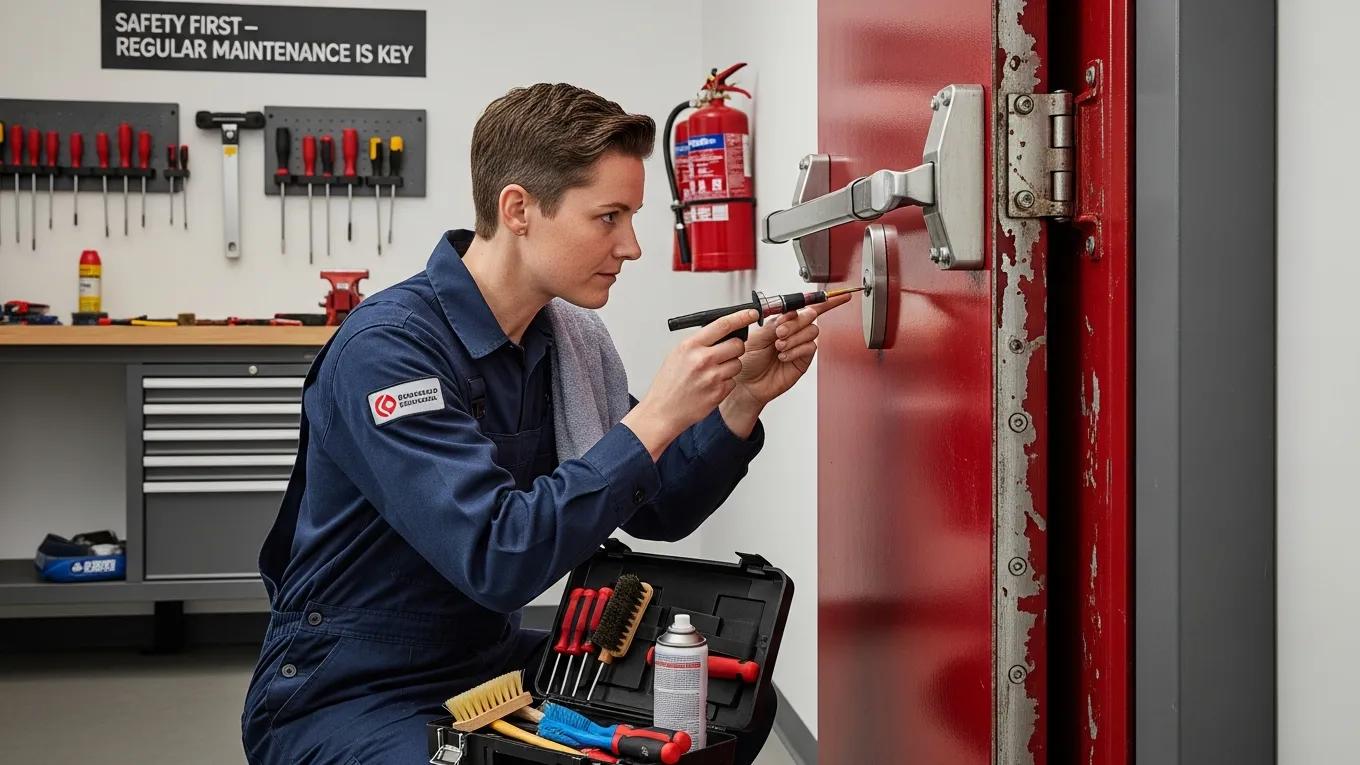
Consistent maintenance preserves performance and demonstrates compliance. Key practices include the items below.
- Regular inspections and prompt repairs: Fix defects quickly to preserve integrity.
- Lubrication and cleaning: Keep moving parts free of debris and properly lubricated.
- Documentation of maintenance activities: Record repairs, parts replaced, and dates of service.
Professional maintenance services help ensure doors remain operational and compliant.
How Does Commercial Fire Door Maintenance Support Certification?
Routine maintenance identifies and corrects defects, helping meet NFPA 80 and other applicable maintenance requirements. Consistent upkeep lowers non‑compliance risk and improves building safety.
What Are Best Practices for Maintaining Fire Doors in Commercial Settings?
Adopt a program that includes:
- Conducting regular inspections to spot wear early.
- Prompt repairs and lubrication to maintain reliable operation.
- Maintaining documentation to demonstrate ongoing compliance.
Impact of Proper Maintenance on Fire Door Certification in Commercial Settings
Proper maintenance supports certification status by preserving door function, reducing liability, and improving occupant safety. Proactive facility managers are better prepared for audits and emergencies.
What Are the Essential Fire Door Testing Procedures for Certification?
Testing for certification typically covers:
- Functional testing: Operation under normal use.
- Fire resistance testing: Verified exposure time performance in tests.
- Documentation of testing results: Records proving compliance.
Which Tests Are Required to Verify Fire Door Performance?
Necessary tests include functional checks of components, sealing and gap verification, and hardware assessments to confirm the door will perform as intended.
- Functional testing of door components
- Sealing and gap checks
- Hardware functionality assessments
Who Conducts Fire Door Testing and Certification?
Certified inspectors with appropriate training perform testing and certification. They apply standards from organizations such as NFPA and OSHA to confirm doors meet safety requirements.
How Do Fire Door Repair Standards Ensure Ongoing Compliance?
Repair standards define acceptable methods to preserve performance. NFPA 80 provides guidance on inspection, maintenance, and repair; following these standards and documenting repairs supports continued compliance.
What Are the Industry Standards for Fire Door Repairs?
Industry expectations include:
- Compliance with NFPA 80
- Inspection and maintenance requirements
- Documentation requirements
When Is Emergency Repair Service Necessary for Fire Doors?
Emergency repairs are required for physical damage, critical hardware failure, or any condition that impairs performance. Prompt action restores protection and reduces occupant risk.
In summary, understanding the certification process, performing regular inspections, and keeping consistent maintenance records are essential to ensure fire doors protect lives and property while meeting regulatory obligations.
Frequently Asked Questions
What Are the Consequences of Non-Compliance with Fire Door Regulations?
Non‑compliance can lead to fines, civil liability, and increased risk in an incident. Faulty doors may not contain smoke or flames, endangering occupants and property. Regular inspections and maintenance reduce these risks.
How Can Facility Managers Ensure Fire Door Compliance?
Implement a structured inspection and maintenance program: schedule annual inspections by certified professionals, keep detailed records of inspections and repairs, provide staff training, and monitor local codes such as NFPA 80.
What Should Be Done If a Fire Door Fails an Inspection?
Address identified defects immediately—repair or replace components, correct installation issues, or restore seals. Document corrective actions and arrange follow‑up inspection by certified professionals.
Are There Specific Fire Door Regulations for Different Types of Buildings?
Yes. Requirements vary by building type and occupancy. Consult local building codes and fire safety regulations to determine applicable specifications for your facility.
What Role Do Fire Door Labels Play in Compliance?
Labels indicate the door’s fire‑resistance rating and test origin. Inspectors check that labels are present and legible; missing or damaged labels should be corrected to maintain regulatory assurance.
How Can Technology Assist in Fire Door Maintenance and Compliance?
Digital inspection tools, maintenance management software, and automated tracking help schedule inspections, capture findings, and log maintenance. Automated alerts support proactive compliance and readiness.
Conclusion
Understanding the fire door certification process and following a disciplined inspection and maintenance program are key to safety and compliance in commercial facilities. Engaging qualified professionals and keeping thorough records ensures doors remain effective and certified.